In today’s interconnected world, children are growing up in an environment where collaboration across cultures, languages, and perspectives is becoming the norm. The opportunities they encounter in higher education and future careers will increasingly extend beyond national borders.
As a result, academic achievement alone is no longer sufficient. Students must also develop cultural awareness, adaptability, empathy, and the confidence to engage with people from diverse backgrounds.
This is where multicultural education plays an important role. By learning within diverse communities, students gain the perspective and interpersonal skills needed to navigate an increasingly global society while becoming thoughtful, responsible contributors to the world around them.
A multicultural learning environment is about more than having students from different countries in the same classroom. It is an educational setting where diverse perspectives, experiences, and cultures are actively integrated into everyday learning.
Diversity creates opportunity, but meaningful multicultural education happens when schools foster an inclusive culture built on respect, collaboration, and belonging.
In these environments, students learn to value different viewpoints while discovering the common values that unite people across cultures. This helps create a community where every learner feels respected, supported, and encouraged to participate.
Some of the most meaningful lessons happen outside formal instruction. Through classroom discussions, collaborative projects, extracurricular activities, and everyday conversations, students regularly engage with peers whose experiences may differ from their own.
These interactions help develop communication skills, cultural understanding, and mutual respect in ways that cannot be replicated through textbooks alone. Over time, students become more open-minded, self-aware, and comfortable working with people from a wide range of backgrounds.
A multicultural learning environment offers far more than exposure to different cultures. It helps students develop the perspectives, character, and future-ready skills needed to thrive in an increasingly interconnected world.
By learning alongside peers from diverse backgrounds, students gain a deeper understanding of different viewpoints while developing the confidence to engage with people from all walks of life. These experiences shape not only how they learn, but also how they communicate, collaborate, and contribute to society.
When students interact with classmates from different cultures, they encounter a variety of ideas, traditions, and ways of thinking.
This exposure encourages them to view challenges from multiple angles and recognize that there is often more than one valid approach to solving a problem. As a result, students become more open-minded, curious, and flexible thinkers.
A diverse learning environment provides daily opportunities to engage with experiences that may differ from one’s own.
Through meaningful interactions, students learn to listen with understanding, appreciate different perspectives, and build relationships founded on mutual respect. These experiences foster empathy, kindness, and strong interpersonal skills that benefit them throughout life.
Today’s students will grow up in a world where international collaboration is increasingly common. Understanding different cultures and perspectives helps them develop a broader awareness of global issues and opportunities.
This awareness encourages students to think beyond their immediate surroundings and recognize their role as responsible members of a global community.
Effective communication is essential in diverse environments. By interacting with peers from different backgrounds, students become more aware of varying communication styles, social norms, and cultural perspectives.
These experiences help them build meaningful connections and communicate with confidence in both local and international settings.
Exposure to new ideas, perspectives, and experiences teaches students how to navigate change with confidence.
As they learn to work with people who think differently from them, they develop flexibility, resilience, and the ability to adapt to unfamiliar situations—qualities that are increasingly valuable in higher education and the workplace.
Diverse classrooms expose students to a wider range of perspectives and approaches to learning.
This encourages thoughtful discussion, deeper analysis, and creative problem-solving, helping students develop the critical thinking skills needed to address complex challenges.
Working with classmates from different backgrounds teaches students how to collaborate effectively, appreciate diverse contributions, and work toward common goals.
These experiences strengthen leadership, teamwork, and emotional intelligence—skills that are highly valued by universities, employers, and communities around the world.
Together, these experiences help students develop the confidence, character, and competencies needed to succeed in an increasingly interconnected world. Beyond academic achievement, they learn how to engage respectfully with others, embrace new perspectives, and contribute meaningfully wherever life takes them.
This is why multicultural learning environments play such an important role in shaping the next generation of global citizens.

For many parents, choosing the right school involves more than academic results. They seek a learning environment that nurtures character, broadens perspectives, and prepares children to succeed in a diverse and interconnected world.
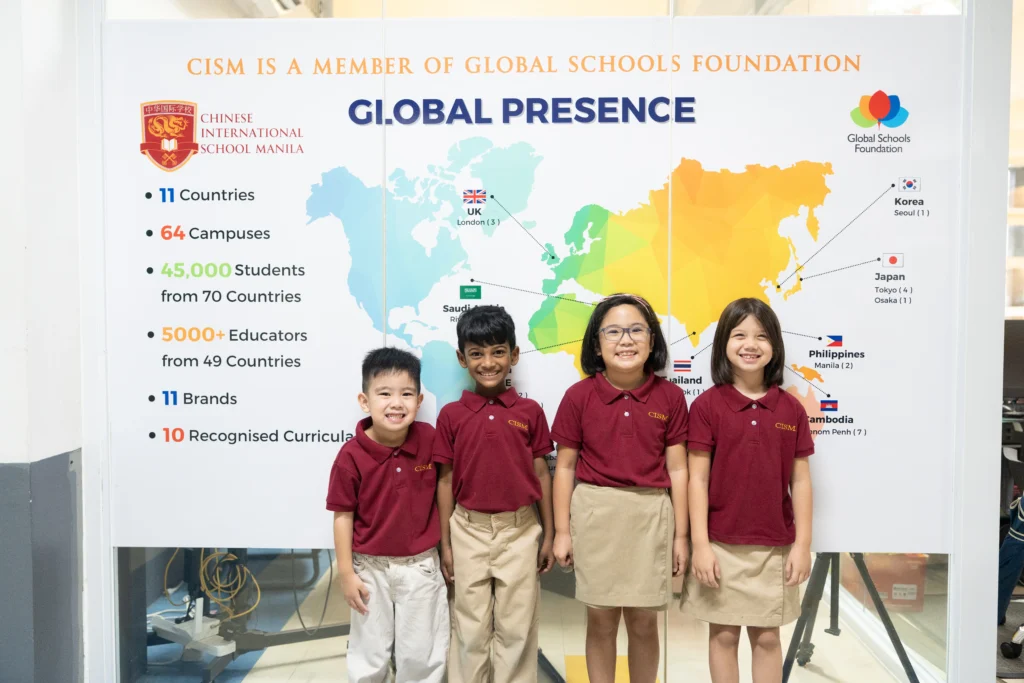
At Chinese International School Manila (CISM), multicultural education is an integral part of the student experience. With nearly 400 students representing more than 25 nationalities, the school offers a vibrant international community where students engage with diverse cultures, perspectives, and experiences every day. These authentic interactions help foster meaningful friendships, cultural understanding, and a strong sense of global awareness.
As an IB World School, CISM embraces an educational philosophy that fosters inquiry, collaboration, critical thinking, and international-mindedness. This approach is further strengthened through an English-language curriculum and a robust Mandarin program, equipping students with the multilingual communication skills needed to thrive in a globalized world.
Learning extends beyond the classroom through meaningful international partnerships and cross-cultural experiences. Through symbiotic exchange programs, students collaborate with peers from partner schools such as Regent International School in Malaysia and Global Indian International School in Japan, broadening their perspectives and deepening their understanding of diverse cultures. These partnerships also create opportunities for faculty exchanges and internships, encouraging the sharing of innovative teaching practices and educational expertise.
Students are equally encouraged to engage with global issues through leadership, service, and advocacy. Through the CISM Model United Nations (CISMMUN) Club, student delegates have represented the school at international conferences, including HMCA 2025 in Taiwan and HKMUN in Hong Kong. Partnerships with the Global Issues Network (GIN) further empower students to organize sustainability-focused initiatives, from coastal cleanups to fundraising and donation drives supporting organizations such as the St. Luke’s Medical Center Charity Foundation.
Service learning is a cornerstone of the CISM experience. Students actively participate in outreach programs that bring them beyond the metropolitan area to communities in need, including projects in Zambales, Bohol, and Thailand. These immersive experiences cultivate empathy, social responsibility, and a deeper appreciation of the challenges faced by different communities.
By combining a diverse international community with an authentic IB education, CISM nurtures students who are empathetic, adaptable, confident, and globally minded. These qualities not only support academic excellence but also prepare students to make meaningful contributions in an increasingly interconnected world.
Discover the programs, curriculum, and student experiences that make CISM a leading international school in Metro Manila.
Explore admissions, campus life, and tuition information, or schedule a campus visit to see firsthand how a multicultural learning environment can shape your child’s future.