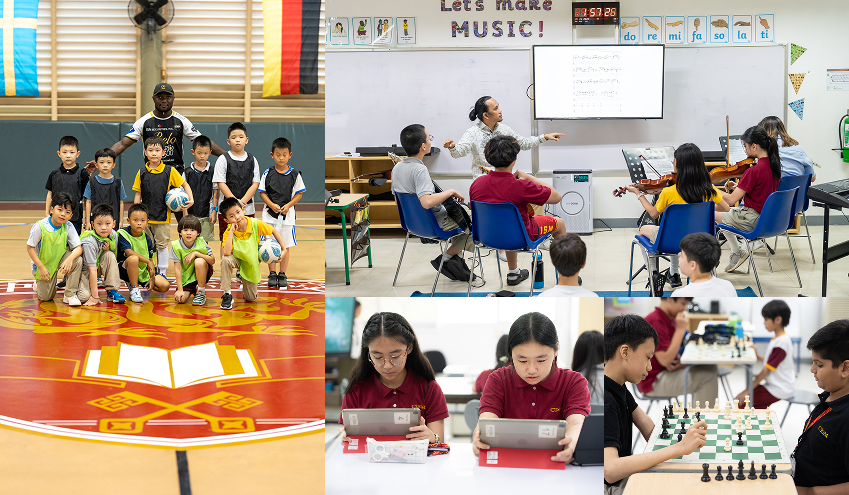
STEAM education is an integrated approach to learning that combines Science, Technology, Engineering, the Arts, and Mathematics to develop students who are curious, creative, collaborative, and capable of solving complex real-world problems. Rather than teaching subjects in isolation, STEAM education connects disciplines in meaningful ways, encouraging students to explore, experiment, and innovate. Due to this reason, many private schools offer STEAM education as part of their programme.
Understanding what STEAM education is also means recognising its role in preparing students for a rapidly changing world. As industries evolve and global challenges become more complex, students need more than subject knowledge alone. They need the ability to think critically, collaborate effectively, and apply learning in authentic contexts. STEAM education provides this foundation.
In this article, we explore how STEAM education:
Highlights the importance of STEAM education in preparing students for future academic and career success.
1
A collaborative approach in STEAM education emphasises learning through teamwork, shared responsibility, and collective problem-solving. Students work together to design, test, and refine ideas, learning from one another throughout the process.
This approach is central to what STEAM education is because real-world challenges are rarely solved in isolation. STEAM education mirrors professional environments where collaboration across disciplines is essential. By working in teams, students develop communication skills, adaptability, and respect for diverse perspectives.
Proven examples include group engineering challenges, collaborative coding projects, and interdisciplinary design tasks where students assume different roles. These experiences strengthen both academic understanding and interpersonal skills.
2
Creativity is at the heart of STEAM education, particularly through the inclusion of the arts. Students are encouraged to think imaginatively, explore multiple solutions, and express ideas in original ways.
This creativity is vital to STEAM education because innovation depends on the ability to think beyond conventional answers. By blending artistic expression with scientific and technical learning, students develop flexible thinking and confidence in experimentation.
Examples include designing prototypes, creating visual representations of scientific concepts, or integrating music and storytelling into technology projects. These activities demonstrate how creativity enhances understanding and engagement.
3
STEAM education improves social skills by creating learning environments where communication, collaboration, and empathy are essential. Students regularly share ideas, provide feedback, and negotiate solutions.
This focus on social development highlights the importance of STEAM education beyond academics. Strong social skills support effective teamwork and leadership, which are critical in both educational and professional contexts.
Examples include peer critiques, group presentations, and collaborative reflection sessions. Through these interactions, students learn to listen actively, articulate ideas clearly, and respect differing viewpoints.
4
STEAM education exposes students to multimedia and multiplatform learning experiences that reflect the digital world they live in. Technology is used not just as a tool, but as a medium for exploration and creation.
This exposure is important because it prepares students for modern learning and working environments. Understanding what is STEAM education involves recognising how digital literacy and adaptability are embedded within the approach.
Examples include using simulation software, digital design tools, coding platforms, and multimedia presentations. These tools enhance engagement and support diverse learning styles.
5
Critical thinking is a core outcome of STEAM education. Students are encouraged to analyse problems, evaluate evidence, test hypotheses, and reflect on outcomes.
This skill development is central to the importance of STEAM education, as critical thinking enables students to approach challenges thoughtfully and independently. Rather than memorising information, learners develop reasoning and decision-making skills.
Examples include analysing data from experiments, troubleshooting design flaws, and evaluating the effectiveness of solutions. These practices build intellectual resilience and confidence.
6
STEAM education boosts curiosity by encouraging students to ask questions and explore ideas deeply. Learning begins with inquiry rather than instruction, sparking intrinsic motivation.
Curiosity is essential to meaningful learning and innovation. By fostering curiosity, STEAM education helps students develop a genuine interest in understanding how things work and why they matter.
Examples include inquiry-based investigations, exploratory challenges, and open-ended design tasks. These experiences encourage students to take risks and embrace learning as a process.
7
One of the defining features of STEAM education is its emphasis on real-world applications. Learning is connected to authentic problems that reflect real societal, environmental, and technological challenges.
This relevance reinforces why STEAM education matters, when students see how their learning applies beyond the classroom, engagement and retention increase significantly.
Examples include designing sustainable solutions, building functional models, or analysing real-world data sets. These applications help students understand the value and impact of their learning.
8
The importance of STEAM education lies in its ability to prepare students for an unpredictable and interconnected future. It equips learners with transferable skills that extend beyond specific subjects.
STEAM education supports academic achievement while nurturing creativity, collaboration, and resilience. It encourages students to become adaptable thinkers and confident problem-solvers.
Examples include improved engagement across disciplines, stronger connections between theory and practice, and increased readiness for future studies and careers. STEAM education empowers students to thrive in a rapidly evolving world.
Understanding what is STEAM education and recognising why it matters is essential in shaping meaningful learning experiences for today’s students. By integrating collaboration, creativity, critical thinking, and real-world application, STEAM education supports holistic development and lifelong learning. The importance of STEAM education extends beyond academic success, preparing students to navigate complexity, innovate with purpose, and contribute positively to the world around them. Through thoughtful implementation, STEAM education inspires curiosity, confidence, and a deep commitment to learning.
Interested in enrolling with CISM? Check out our admission process to learn about how we implement inquiry-based learning in our IB programme and more!