
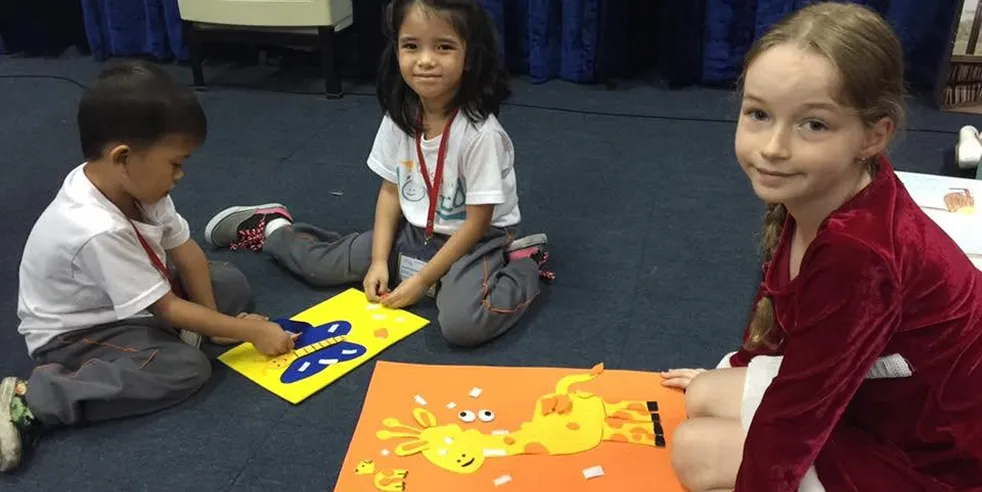
Elementary education plays a vital role in shaping a child’s academic foundation and overall development. In today’s rapidly changing world, strong early education is more important than ever because it helps children build the knowledge, skills, and confidence needed for lifelong learning. Many elementary schools in Manila and across the country today focus not only on academic achievement but also on creativity, communication, collaboration, and emotional growth.
Early learning experiences significantly influence how children think, interact, and adapt to new challenges. A well-designed elementary curriculum introduces students to core subjects while helping them develop problem-solving skills, social awareness, and independence. Through structured learning environments and engaging activities, children begin forming habits and attitudes that influence future academic success and personal development.
In this post, we will explore:
Elementary school introduces students to a broad range of subjects designed to build foundational academic skills. The elementary curriculum typically includes language arts, mathematics, science, social studies, arts, and physical education. These subjects are taught through age-appropriate lessons that encourage curiosity and exploration.
This broad learning approach is important because it helps children develop balanced academic and personal growth. Elementary education is not solely focused on memorization; it encourages critical thinking, creativity, communication, and collaboration from an early age.
Examples include students learning reading comprehension through storytelling, exploring scientific concepts through hands-on experiments, and developing teamwork skills during collaborative classroom projects. These activities help create engaging and meaningful learning experiences.
One of the primary goals of the elementary education curriculum is to strengthen foundational skills that students will continue building upon throughout their academic journey. These include literacy, numeracy, communication, and problem-solving skills.
At the same time, elementary schools emphasize holistic development by supporting emotional intelligence, social interaction, creativity, and physical well-being. This balanced approach helps children become confident and adaptable learners.
Examples include classroom discussions that promote communication skills, social-emotional learning activities that encourage empathy, and creative arts programs that allow self-expression. These experiences contribute to both academic readiness and personal growth.
Language and literature classes focus on reading, writing, listening, and communication skills. Students gradually develop vocabulary, comprehension, grammar, and creative expression.
This area is essential because strong literacy skills support learning across all subjects. Reading and communication abilities form the foundation for academic success and lifelong learning.
Examples include guided reading sessions, creative writing exercises, storytelling activities, and book discussions that encourage analytical thinking and imagination.
Mathematics in the elementary curriculum introduces students to numbers, patterns, operations, measurement, geometry, and problem-solving strategies.
Math education is important because it develops logical reasoning and analytical thinking skills that students use in everyday life and future academic learning.
Examples include learning addition and subtraction in early grades, exploring fractions and multiplication in middle grades, and applying mathematical reasoning to real-world scenarios.
Science education encourages curiosity and exploration by introducing students to concepts related to nature, physical science, life science, and the environment.
This subject supports critical thinking and inquiry-based learning, helping students understand how the world works through observation and experimentation.
Examples include simple science experiments, environmental projects, and hands-on investigations that encourage students to ask questions and explore solutions.
The social studies curriculum elementary students experience focuses on understanding communities, history, geography, cultures, and citizenship.
This area of learning is important because it helps students develop cultural awareness, empathy, and an understanding of society. Social studies also teaches responsibility and community engagement.
Examples include learning about local communities, exploring world cultures, discussing historical events, and participating in classroom activities related to civic responsibility.
Arts and physical education support creativity, self-expression, teamwork, and physical well-being. Students explore visual arts, music, movement, and physical activities as part of their development.
These subjects are important because they contribute to holistic growth and encourage students to develop confidence and healthy habits.
Examples include music performances, art projects, sports activities, and dance sessions that help students build creativity, coordination, and collaboration skills.
In the early elementary years, students focus on learning basic reading, writing, counting, and social interaction skills. Teachers create supportive environments where children learn routines, communication, and classroom behavior.
These foundational years are important because they establish the academic and social building blocks needed for future learning.
Examples include phonics instruction, basic math activities, collaborative play, and guided classroom discussions.
As students progress into middle elementary years, they strengthen reading comprehension, writing structure, and mathematical problem-solving abilities.
This stage is important because students begin applying knowledge more independently and developing stronger analytical skills.
Examples include reading longer texts, solving multi-step math problems, conducting science projects, and participating in group assignments.
Upper elementary students are encouraged to think critically, manage responsibilities independently, and apply learning across subjects.
This phase prepares students for more advanced academic expectations while fostering confidence and decision-making skills.
Examples include research projects, presentations, advanced math concepts, and leadership opportunities within the classroom.
| Elementary Level | Key Learning Focus | Student Outcomes |
| Early Grades | Basic literacy, numeracy, social development | Foundational reading, counting, communication skills |
| Middle Grades | Reading comprehension, math concepts, collaboration | Improved analytical thinking and academic confidence |
| Upper Elementary | Critical thinking, independence, advanced problem-solving | Stronger leadership, responsibility, and preparation for higher learning |
The elementary education curriculum strengthens memory, reasoning, problem-solving, and critical thinking abilities through structured academic activities.
This cognitive development is essential because it helps children process information effectively and adapt to increasingly complex learning environments.
Examples include mathematical reasoning exercises, reading comprehension activities, and inquiry-based science projects that encourage analysis and creativity.
Elementary education also supports socio-emotional development by teaching children how to communicate, collaborate, and manage emotions effectively.
This area is important because emotional intelligence influences classroom participation, relationships, and long-term well-being.
Examples include group projects, classroom discussions about emotions, and activities that encourage empathy and teamwork.
Children often retain information more effectively when introduced to concepts during early developmental stages. Early exposure to learning helps reinforce long-term understanding and habits.
This is why a strong elementary curriculum is so valuable. Skills developed during elementary years often become the foundation for future academic achievement and personal growth.
Examples include early reading habits supporting long-term literacy, foundational math skills strengthening future problem-solving, and social interaction improving communication abilities.
Elementary education serves as the foundation for lifelong learning and personal growth. Through a well-rounded elementary education curriculum, many good schools in Manila can help children develop essential academic, cognitive, social, and emotional skills that prepare them for future success.
From literacy and mathematics to science, arts, and the social studies curriculum elementary students experience, each subject contributes to a child’s holistic development. As students progress through each elementary year, they gain greater independence, critical thinking abilities, and confidence in their learning journey.
A strong elementary curriculum not only supports academic achievement but also helps children become curious, resilient, and adaptable individuals ready to navigate the challenges of the future.
An elementary school curriculum typically includes language arts, mathematics, science, social studies, arts, and physical education.
Children progressively develop literacy, numeracy, critical thinking, communication, and social-emotional skills as they advance through each grade level.
It builds foundational academic and life skills that support long-term learning, confidence, and personal development.
Students learn about communities, geography, history, cultures, citizenship, and social responsibility.
It supports cognitive growth, emotional intelligence, communication skills, creativity, and independent learning through balanced educational experiences.